Dog bloat is one of the most serious — and most misunderstood — emergencies in veterinary medicine. It kills thousands of dogs every year in the United States, often within hours of the first symptoms. Most owners have never heard of it until it happens to their dog.
This guide covers everything you need to know: what bloat actually is, which dogs are most at risk, how to recognise the early warning signs, and most importantly — what you can do starting today to significantly reduce your dog's risk.
What Is Dog Bloat?
Bloat refers to two related but distinct conditions that are often grouped together:
Gastric Dilatation (GD) is the first stage. The stomach fills with gas, food, or fluid and expands to two or three times its normal size. On its own, GD is painful and dangerous but potentially treatable without surgery.
Gastric Dilatation-Volvulus (GDV) is the second, life-threatening stage. As the stomach expands, it can rotate on its axis — sometimes twisting 180 to 360 degrees. This rotation traps gas inside, cuts off the blood supply to the stomach and spleen, and begins killing surrounding tissue within minutes. GDV is always fatal without immediate emergency surgery.
The two conditions together are what most people mean when they say "dog bloat." The critical point is how fast GD can progress to GDV — sometimes within 30 to 60 minutes.
How Common Is It?
GDV affects an estimated 40,000 to 60,000 dogs in the United States every year. It is the second leading cause of death in dogs after cancer. Emergency surgery costs between $3,000 and $8,000 and carries a survival rate of 50% even with immediate treatment. If left untreated for more than a few hours, the survival rate drops to near zero.
These numbers make bloat one of the most important health topics for dog owners to understand — yet surveys consistently show that fewer than 30% of dog owners are aware of what it is or how to prevent it.
Which Dogs Are Most at Risk?
Any dog can experience bloat, but certain breeds are dramatically more susceptible due to their deep, narrow chest cavity. The following breeds are considered high-risk:
- Great Danes — the highest risk breed; lifetime bloat risk of up to 42%
- German Shepherds
- Standard Poodles
- Labrador Retrievers
- Golden Retrievers
- Doberman Pinschers
- Boxers
- Irish Setters
- Weimaraners
- Saint Bernards
Beyond breed, several other risk factors increase susceptibility:
- Age — dogs over 7 are at significantly higher risk than younger dogs
- Sex — male dogs are twice as likely as females to develop GDV
- Family history — a first-degree relative with GDV increases risk substantially
- Fast eating — eating an entire meal in under 2 minutes is one of the strongest modifiable risk factors
- Eating from a raised bowl — contrary to older advice, raised bowls may actually increase GDV risk in large breeds
- Exercising immediately after eating — vigorous activity within 1 hour of a meal significantly increases risk
- Stress and anxiety — dogs with anxious temperaments have higher GDV rates
- Eating one large meal per day — versus two or three smaller meals
Warning Signs of Bloat
Recognising bloat early is the difference between a treatable condition and a fatal one. The following symptoms require immediate emergency veterinary care — do not wait to see if they improve:
- Distended, hard, or drum-like abdomen — the stomach visibly swells and feels tight when pressed
- Unproductive retching — the dog attempts to vomit but nothing comes up, or produces only small amounts of white foam
- Restlessness and inability to get comfortable — pacing, lying down and immediately standing up, repeated repositioning
- Salivating excessively — drooling far more than usual
- Signs of distress or pain — whimpering, guarding the abdomen, looking at or biting at the stomach
- Rapid shallow breathing
- Pale gums — a sign of shock and reduced blood flow
- Weakness or collapse — a late-stage sign indicating the condition has progressed severely
If your dog shows any combination of the above signs — especially after eating — treat it as an emergency and go to a veterinary clinic immediately. Do not give food or water. Do not induce vomiting. Every minute matters.
What Happens During Emergency Treatment?
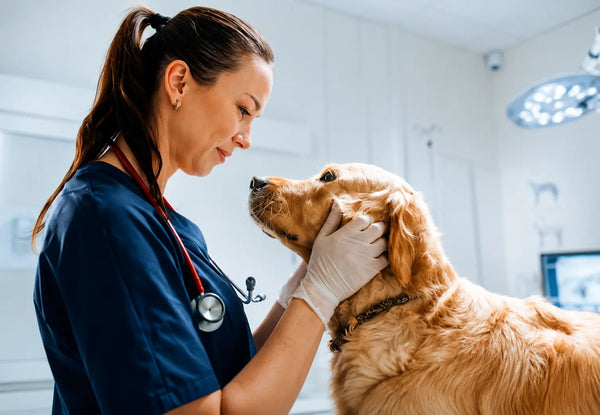
When a dog with GDV arrives at an emergency clinic, the veterinary team will typically:
- Stabilise the dog with intravenous fluids to treat shock
- Decompress the stomach by passing a tube down the throat or inserting a needle through the abdomen to release trapped gas
- Perform emergency surgery to untwist the stomach and return it to its correct position
- Assess and remove any portion of the stomach or spleen with dead tissue due to loss of blood supply
- Perform a gastropexy — permanently attaching the stomach to the abdominal wall to prevent future rotation
The surgery itself typically takes 1–2 hours and requires intensive post-operative care. Even with successful surgery, complications including heart arrhythmia, peritonitis, and systemic infection can occur in the days following the procedure. This is why the survival rate, even with immediate treatment, is only 50%.
7 Evidence-Based Ways to Reduce Your Dog's Bloat Risk
1. Use a Slow Feeder Bowl
Fast eating is one of the most significant modifiable risk factors for GDV. A dog that inhales their entire meal in 15 seconds swallows enormous amounts of air along with their food — the primary driver of gastric dilatation.
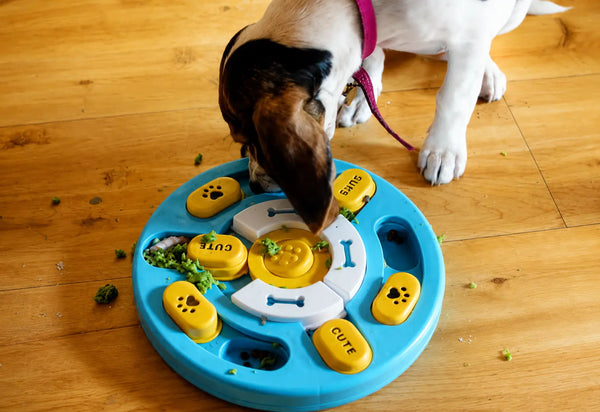
A slow feeder bowl with raised maze channels forces your dog to eat around obstacles, extending a typical 15-second meal to 8–12 minutes. This is one of the simplest and most cost-effective preventive measures available. The Pawvify Slow Feeder Bowl costs less than $20 and can be used at every meal for years.
2. Feed Two or Three Smaller Meals Per Day
Dogs fed once per day are twice as likely to develop GDV as those fed twice per day, according to veterinary research. Splitting the daily food allowance into two or three smaller meals reduces the volume consumed at any one sitting and lowers the urgency (and speed) of eating at each meal.
3. Never Exercise Immediately After Eating
Wait at least 1 hour after a meal before any vigorous exercise — running, fetch, swimming, or rough play. Exercise on a full stomach causes the stomach to move more than usual, increasing the risk of rotation. A calm post-meal period is one of the simplest preventive habits to establish.
4. Do Not Use a Raised Food Bowl
For decades, raised bowls were recommended for large breeds. More recent research has reversed this — raised bowls are now associated with a higher risk of GDV in large and giant breeds. Feed your dog from a floor-level bowl unless specifically advised otherwise by your vet.
5. Reduce Stress Around Mealtimes
Anxious dogs are more prone to GDV. If your dog eats frantically because they're competing with other pets, feed them in a separate room. If mealtimes cause general anxiety, a lick mat given before dinner can lower cortisol and create a calmer pre-meal state.
6. Consider a Prophylactic Gastropexy
For high-risk breeds — particularly Great Danes, German Shepherds, and Standard Poodles — many veterinarians now recommend a prophylactic gastropexy: a surgical procedure that permanently attaches the stomach to the abdominal wall, preventing it from rotating. It can be done at the same time as spay or neuter surgery and costs $200–$400 when performed electively, compared to the $3,000–$8,000 cost of emergency GDV surgery. For high-risk breeds it is worth discussing seriously with your vet.
7. Know Your Nearest Emergency Veterinary Clinic
This is practical prevention, not medical. Know in advance where your nearest 24-hour emergency veterinary clinic is and how long it takes to get there. In a GDV emergency, the difference between a 10-minute drive and a 45-minute drive can determine whether your dog survives. Save the address and phone number in your phone now, before you ever need it.
The Slow Feeder Effect: Real Numbers
A 2001 study published in the Journal of the American Veterinary Medical Association followed 1,934 dogs over a 5-year period and found that eating speed was one of the three most significant risk factors for GDV. Dogs that ate rapidly had a significantly higher incidence of GDV compared to dogs that ate slowly.
A slow feeder bowl addresses this directly and immediately. Unlike breed or age — factors you cannot change — eating speed is something you can modify starting at the next meal.
Summary: What to Do Starting Today
- Switch to a slow feeder bowl to prevent fast eating and air ingestion
- Split daily food into two meals instead of one
- Wait at least 1 hour after eating before vigorous exercise
- Feed from a floor-level bowl, not a raised one
- Know your nearest 24-hour emergency vet clinic
- If you have a high-risk breed, discuss prophylactic gastropexy with your vet
- Learn to recognise the early warning signs so you can act immediately if they appear
Bloat is terrifying, but it is not inevitable. The risk factors are well understood, and most of them are manageable. A slow feeder bowl at every meal is the single most impactful change most dog owners can make today — and at under $20, it's also one of the most accessible.