Dog anxiety is more common than most owners realise. Studies estimate that as many as 70% of dogs exhibit some form of anxiety-related behaviour — yet fewer than 30% of those dogs ever receive any form of treatment or management. Most owners either don't recognise the signs, assume the behaviour is just their dog's personality, or feel overwhelmed by the idea of addressing it.
The good news: most mild to moderate dog anxiety responds extremely well to non-medication approaches. This guide covers the evidence-based techniques that actually work, why they work at a neurological level, and how to implement them starting today.
Understanding Dog Anxiety: What's Actually Happening
When a dog becomes anxious, their amygdala — the brain's fear and threat-detection centre — activates and triggers a cascade of physiological changes. Cortisol and adrenaline flood the system. Heart rate increases. The prefrontal cortex — responsible for rational decision-making and the ability to respond to training or commands — essentially goes offline.
This is why telling an anxious dog to "sit" or "stay" doesn't work. Their brain is in survival mode and literally cannot process commands. It's also why punishment during anxiety states is actively harmful — it adds stress to an already overloaded nervous system and worsens the underlying anxiety over time.
Effective anxiety management works by either preventing the amygdala activation from happening in the first place, or by activating competing neurological systems (particularly the parasympathetic nervous system) that physiologically cannot coexist with the anxiety response.
Common Signs of Dog Anxiety
Anxiety in dogs doesn't always look like what you'd expect. Beyond obvious trembling or hiding, anxious dogs often display:
- Excessive barking or whining, particularly when alone
- Destructive chewing — especially around doors, windows, and exits
- Pacing and inability to settle
- Excessive licking of paws, legs, or surfaces
- Yawning, lip licking, or ears back in non-sleepy contexts (these are stress signals)
- Refusing food or eating very fast
- Aggression when approached during high-stress situations
- Accidents in the house from a housetrained dog
- Excessive clingy behaviour and following you from room to room
- Restlessness before predictable triggers (thunderstorms, car rides, vet visits)
If your dog shows several of these consistently, anxiety is almost certainly a factor. If symptoms are severe or include aggression, consult a veterinary behaviourist alongside implementing the techniques below.
1. Lick Mats: The Fastest Neurological Intervention
Repetitive licking is one of the most powerful and immediately available anxiety interventions for dogs. Here's why it works at a physiological level:
Licking activates the parasympathetic nervous system — the body's "rest and digest" state. This system is directly antagonistic to the sympathetic "fight or flight" state that anxiety produces. It is neurologically impossible for both systems to be dominant simultaneously. When a dog licks steadily and rhythmically, the parasympathetic system wins.
Simultaneously, repetitive licking triggers endorphin release — the same neurochemicals released during exercise that produce the "runner's high" in humans. Endorphins suppress cortisol (the primary stress hormone) and create a genuine state of neurological calm, not just distraction.
A silicone lick mat spread with peanut butter or plain yogurt delivers this effect for 10–20 minutes. Freeze it and the effect extends to 30–45 minutes. This makes frozen lick mats the single most versatile anxiety management tool available to dog owners because they can be deployed in almost any anxiety-triggering situation:
- Bath time: Stick to the tub wall with suction cups. Dog focuses entirely on the mat.
- Nail trims: Place in front of the dog during the procedure.
- Thunderstorms and fireworks: Give at the first sign of anxiety, before the peak.
- Vet visits: Bring a frozen mat to the waiting room and examination table.
- Before leaving the house: Give 5 minutes before departure to occupy the critical first 30 minutes of alone time.
- Car anxiety: Secure in the back seat for the duration of the journey.
2. Enrichment Feeding: Addressing the Root Cause
A significant portion of what dog owners interpret as anxiety is actually frustration from under-stimulation. Dogs evolved to spend 6–8 hours per day in active foraging, problem-solving, and hunting behaviour. Domestic dogs typically spend those 6–8 hours doing nothing. The resulting frustration often presents as anxiety.
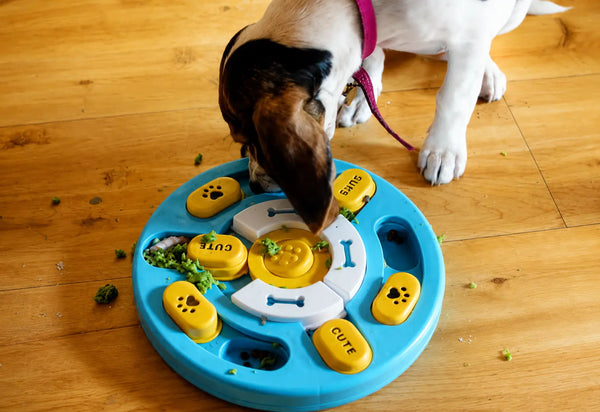
Enrichment feeding — using a snuffle mat, puzzle feeder, or scatter feeding instead of a regular bowl — engages these natural drives in a constructive way. Dogs that get regular enrichment feeding show measurably lower baseline cortisol levels than those fed from a standard bowl. The effect accumulates over time: consistent enrichment produces a calmer dog not just during the activity but throughout the day.
Think of enrichment feeding as managing anxiety at the root rather than managing symptoms at the surface.
3. Predictable Routine
Dogs are routine animals. Unpredictability is one of the most significant anxiety triggers in the domestic environment. Dogs that don't know when they'll be fed, walked, or left alone exist in a state of chronic low-level anxiety because they can't predict their environment.
Establishing consistent daily rhythms — feeding at the same times, walks at similar times, bedtime at a consistent hour — reduces this chronic background anxiety significantly. Within 2–3 weeks of a stable routine, most dogs show measurable reductions in anxiety-related behaviour simply because their world has become predictable and safe.
This is particularly important for rescue dogs and newly adopted dogs who are adjusting to a new environment. A consistent routine communicates safety more effectively than any amount of reassurance.
4. Counterconditioning and Desensitisation
Counterconditioning means changing the emotional response to an anxiety trigger by pairing it with something positive. Desensitisation means gradually and systematically exposing your dog to the trigger at a low enough intensity that they don't become anxious, then slowly increasing the intensity over time.
Together, these techniques are the gold standard for treating specific anxiety triggers — thunderstorms, car rides, strangers, other dogs, being left alone — and they work for the vast majority of dogs when applied consistently.
A simple example for car anxiety:
- Day 1–2: Sit in the stationary car with your dog. Give high-value treats. Get out. Repeat.
- Day 3–4: Start the engine with the car in park. Treats. Engine off. Get out.
- Day 5–7: Drive to the end of the street and back. Treats throughout. Return home.
- Week 2: Gradually extend journey length while maintaining positive associations.
The key principle is never pushing the dog past the point where they can remain calm. If they show anxiety at any stage, go back to the previous step. Progress can be slow — weeks or months for severe triggers — but the results are durable.
5. Physical Exercise — Timed Correctly
Exercise reduces anxiety by burning off excess adrenaline, releasing endorphins, and physically tiring the body. But the timing and type of exercise matters more than most owners realise.
High-intensity exercise (running, fetch, agility) produces adrenaline and cortisol during the activity before dropping them afterwards. For anxious dogs, high-intensity exercise can temporarily worsen anxiety during the session even though it helps afterwards. Moderate, sustained, sniff-heavy walking — where the dog leads and follows their nose — produces a calmer neurological state during and after the activity. A 30-minute "sniff walk" where the dog chooses the pace and direction is often more beneficial for anxiety than a 60-minute fast walk.
Aim for daily exercise but combine it with mental enrichment rather than relying on physical exercise alone.
6. Safe Space and Retreat
Anxious dogs need a place they can go when overwhelmed that they know is unconditionally safe. This is typically a crate (with the door open and a blanket covering three sides) or a bed in a quiet corner. The key is that this space is never used for punishment and no one is allowed to disturb the dog when they're in it.
Once established, anxious dogs will voluntarily retreat to this space when stressed, which is healthy self-regulation behaviour. The safe space gives them agency over their own emotional state, which itself reduces anxiety over time.
Cover the crate or bed with a blanket on three sides to create a den-like enclosure. Add an item of your clothing (unwashed) for scent comfort. Keep the space in a low-traffic part of the house away from front doors, televisions, and high-noise areas.
7. Massage and Physical Contact
Physical touch activates the release of oxytocin in both dogs and humans. Slow, firm, deliberate massage — particularly around the ears, base of the skull, and along the spine — has been shown to reduce heart rate and cortisol in anxious dogs.
The key word is "deliberate." Anxious petting that mirrors the owner's own anxiety (fast, patting movements, high-pitched reassurance) can actually reinforce and escalate the dog's anxiety. Slow, calm, rhythmic strokes communicate safety. Your emotional state transmits directly to your dog — remaining calm yourself is a genuine therapeutic intervention.
8. The Thundershirt and Pressure Wraps
Pressure wraps work on the same neurological principle as swaddling an infant. Gentle, constant pressure on the torso activates the parasympathetic nervous system and reduces anxiety in a significant proportion of dogs. The Thundershirt is the most widely studied commercial version, with research suggesting it reduces anxiety signs in approximately 80% of dogs to some degree.
It doesn't work for every dog and its effectiveness tends to decrease if worn constantly (reserve it for specific anxiety-triggering situations). But for dogs with specific triggers like thunderstorms, fireworks, travel, or vet visits, a pressure wrap is worth trying before medication.
When to Seek Professional Help
The techniques in this guide work well for mild to moderate anxiety. Seek professional veterinary help if:
- Anxiety is severe enough to prevent your dog from eating, sleeping, or functioning normally
- Anxiety is causing self-harm (excessive licking to the point of wounds, self-scratching)
- Your dog shows aggression during anxiety episodes
- Anxiety has developed suddenly in an adult dog with no prior history (can indicate a medical cause)
- You've applied these techniques consistently for 6–8 weeks without improvement
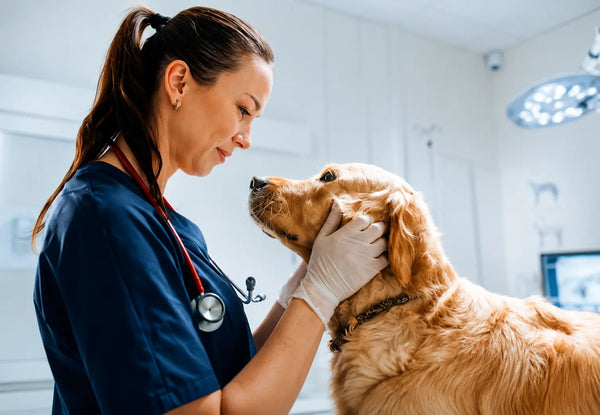
A veterinary behaviourist — not just a general vet — is the appropriate professional for complex anxiety cases. They can combine behavioural techniques with medication when necessary for a more effective outcome than either approach alone.
Summary: Your Daily Anti-Anxiety Toolkit
- Morning: Enrichment feeding with a snuffle mat or puzzle feeder to engage natural foraging instincts and lower baseline cortisol
- Midday: A frozen lick mat for calm, focused licking during any predictable anxiety window
- Afternoon: Sniff walk at the dog's own pace — nose-led, low intensity
- Evening: Consistent routine, quiet time in their safe space, calm physical contact
- As needed: Frozen lick mat for acute triggers (storms, visitors, loud events)
Anxiety in dogs is real, common, and highly treatable. The techniques above, applied consistently, produce genuine neurological change over time — not just surface-level behavioural suppression. Start with what's easiest to implement (a frozen lick mat and daily enrichment feeding), and build from there. Most owners see meaningful improvement within 2–3 weeks of consistent application.