Does your dog finish their entire meal before you've even put the bowl down? You're not alone. Fast eating is one of the most common concerns among dog owners — and one of the most underestimated health risks. In this guide we'll cover exactly why dogs eat too fast, what health problems it causes, and the most effective ways to slow them down starting today.
Why Do Dogs Eat So Fast?
Dogs are descended from wild ancestors that competed for food in packs. In that environment, eating quickly meant eating more — the dog that hesitated lost their meal to a faster packmate. This survival behaviour is deeply wired into their instincts, which is why even well-fed, comfortable domestic dogs often eat as if someone is about to steal their bowl.
Other factors that contribute to fast eating include feeding only once per day (intense hunger leads to frantic eating), competition with other pets in the household, high-energy breeds with naturally fast metabolisms, anxiety or stress around mealtimes, and a bowl that makes food too easy to access.
The Real Danger: Why Fast Eating Is a Serious Health Risk
Most dog owners assume fast eating is just a cosmetic problem — messy and slightly embarrassing, but harmless. This is unfortunately not true.
Gastric Dilatation-Volvulus (GDV) — Bloat
The most serious consequence of fast eating is GDV, commonly known as bloat. When a dog eats rapidly, they swallow large quantities of air along with their food. This air becomes trapped in the stomach, causing it to expand dramatically. In severe cases — which can develop within hours — the stomach twists on itself, cutting off blood supply to vital organs.
GDV is a veterinary emergency. Emergency surgery costs $3,000 to $8,000 and has a survival rate of just 50% even with immediate treatment. It kills thousands of dogs every year in the United States alone. Large breeds with deep chests — German Shepherds, Great Danes, Labradors, Golden Retrievers, Dobermans, and Boxers — are at particularly high risk. But bloat can affect any dog of any size.
Other Health Problems Caused by Fast Eating
- Vomiting after meals — food is brought back up because the stomach is overwhelmed
- Chronic indigestion — food isn't chewed or digested properly
- Weight gain — the brain needs 15–20 minutes to register fullness; fast eaters overshoot this window
- Choking — large unchewed pieces can partially block the airway
- Boredom and frustration — a meal finished in 8 seconds provides zero mental stimulation
6 Proven Ways to Stop Your Dog Eating Too Fast
1. Use a Slow Feeder Bowl
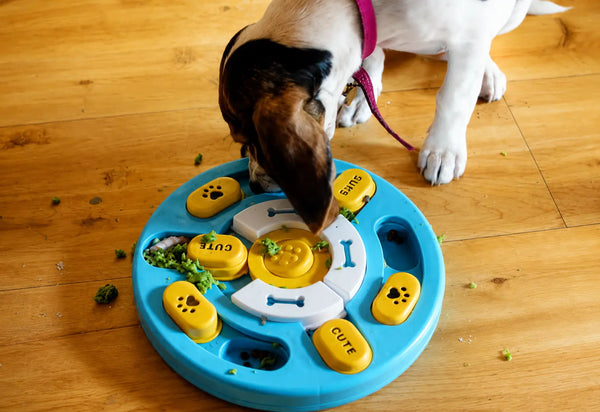
A slow feeder bowl is the most effective and lowest-effort solution available. These bowls have raised ridges, channels, and maze patterns built into the surface that force your dog to eat around obstacles rather than scooping up mouthfuls directly. The result: a meal that takes 8–15 seconds now takes 8–12 minutes. Most dogs adapt immediately — no training required.
A quality slow feeder bowl like the Pawvify Slow Feeder Bowl costs less than $20 and can be used at every meal for years. It's the highest ROI health investment most dog owners can make.
2. Use a Snuffle Mat
A snuffle mat is a textured fabric mat with hundreds of fabric folds and pockets where you can hide kibble. Your dog has to use their nose to sniff out individual pieces of food, which naturally slows eating while providing significant mental stimulation. 15 minutes of snuffle mat feeding is as mentally tiring for a dog as a 30-minute walk.
3. Spread Food on a Lick Mat
For wet food, peanut butter, or soft spreads, a lick mat is the equivalent of a slow feeder bowl. Spread the food into the textured grooves and your dog has to lick methodically to access it. Freeze the lick mat for 2 hours and the same meal can last 30–45 minutes.
4. Feed Smaller, More Frequent Meals
If your dog is eating frantically because they're genuinely hungry, splitting their daily food allowance into two or three smaller meals reduces the urgency at each sitting. A dog fed twice daily approaches each meal with far less desperation than one fed once.
5. Hand Feeding
For dogs with severe fast-eating issues, temporarily hand feeding — offering food piece by piece from your hand — eliminates the problem entirely. It's time-intensive but effective for breaking the habit and rebuilding a calmer relationship with food.
6. The Muffin Tin Method
Place small amounts of kibble into the cups of a standard muffin tin and cover each cup with a tennis ball. Your dog has to remove the balls one by one to access the food. A completely free DIY solution using items you probably already have.
Which Method Is Best?
For most dog owners, a slow feeder bowl is the answer. It requires zero effort after the initial purchase, works at every meal, is easy to clean, and is safe for dogs of all sizes and ages. The snuffle mat is the best companion — ideal for breakfast when you have a few minutes to supervise. For dogs with anxiety around mealtimes, the lick mat is particularly valuable because repetitive licking releases endorphins and reduces cortisol, addressing both the speed and the stress simultaneously.
When to See a Vet
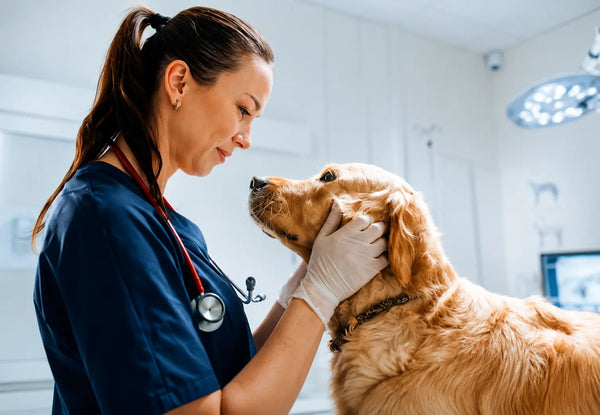
If your dog vomits regularly after meals, appears bloated or uncomfortable after eating, or shows signs of distress during mealtimes, consult your veterinarian before making changes. In some cases rapid eating can be a symptom of an underlying medical condition including gastrointestinal disorders, intestinal parasites, or malabsorption syndromes.
Summary
Fast eating is not just an aesthetic problem — it's a genuine health risk that is extremely easy to address. A slow feeder bowl costing less than $20 can eliminate the problem at every meal while adding 10 minutes of mental enrichment to your dog's day.
- Switch to a slow feeder bowl for main meals
- Add a snuffle mat or lick mat for variety and enrichment
- Split meals into two daily feedings if possible
- Monitor for vomiting or bloating and consult a vet if concerned